.jpg)
hurd family history
This page is a short story of the history of the matriarchal side of my family, the Hurds!
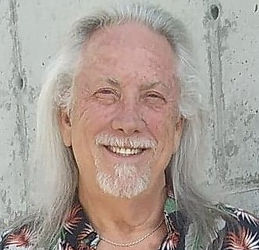
MY MATRIARCHAL FAMILY HISTORY - THE HURDS! by Donald Ray Hurd Hiser
BEGINNINGS
My name is not Ishmael! Although I've spent a great deal of my life traveling around the world chasing "great whales" of both currency and answers to life's ultimate purpose! My name is Donald Ray Hurd Hiser! Donald - from the Scottish/Irish "Domhnall" indicating my combined Campbell (Scottish) Clan from "Alba" and Scalf (Irish) from the "Emerald Isle". Ray - my patriarchal family's most commonly used male middle-name defined as "wise protector" in "old-German"! Hurd - my matriarchal surname, is of Anglo-Saxon origin. It comes from when one of my ancestors worked as a "herdsman" in England ("cowboy" in common North American vernacular).
The surname "Hurd" was first officially documented in the records of Shropshire, England in 1221. The original Hurd family came as settlers to the United States in the 17th century and included men like Chris Hurd in Virginia in 1652, James Hurd in Maryland in 1657, and Nicholas Hurd in New England in 1699. Hiser - While I am holding the full story of the "Hiser" clan for a future writing, the surname is a derivative of Germanic names like "Hessler" and "Heizer" but was probably spoke first as a word in Germanic areas as "huser" meaning a "slope" or "hill". The "Hiser" surname seems to have developed from Anglo-Saxon use and was first officially documented in the village and township of Hessay in the West Riding of Yorkshire, England. The surname is typical of the times where surnames were derived from the names of pre-existing towns, villages and farmsteads during the Anglo-Saxon period from c.410-1066. John Hiser, one of my first direct descendants to immigrate to North America, was an Englishman who came over to the colonies in the 1700's and settled in Virginia.
As with many who left England to pursue a better fortune, John was a planter and was documented, to my chagrin, to have owned slaves in Virginia! Public documents indicate that the "Hurds" and future "Hisers" of direct ancestry to me did not hold slaves after this initial occurrence in Virginia. Hopefully, the sins of the fore-fathers cannot be visited upon their progeny, unless they let those sins continue! While I could find no indication of the practice of owning slaves by the Hurd family prior to Emancipation after the American Civil War, it would not be surprising if they did, as many "white property owners" in Tennessee and Kentucky did own slaves prior to the Emancipation Proclamation by President Abraham Lincoln in 1863 and the end of the American Civil War in 1865. It would seem that this abhorrent practice was abandoned by my "Hiser" family after this initial occurrence due mainly to what many original Western US peoples from Europe experienced...a gradual decrease in ability to financially "own" other peoples and movement to the undeveloped "hills" and "hollers" of Appalacha and the western lands where this practice was inefficient and frowned upon by early, independent-minded settlers. The "Sweat of My Own Brow" types! Or in addition, as I would like to believe but have no direct confirmation of, due to my family's independent nature and a growing "Abolitionist" movement prior to the American Civil War in the areas where they lived. I do not state these things on slavery as an attempt to wash away my family's involvement. I only bring this up here to state that my family has always been a family of independent thinkers, morals through actions and not just words, and strongly attune to fighting the constant battle of "right vs wrong" in this world! As for "pre-history", it is not my intent here to try to provide you with where my ancient ancestors came from before the documented history of pre-European and pre-Eastern United States. Suffice it to say we are all brothers and sisters in common ancestry at some point in the development of the human race. (name-history extracted from houseofnames.com)
I have always told people wherever I happened to be, on my several visitations of foreign lands around this entire blue orb, that I am part Native American, or if they prefer the grossly misapplied European designation of all Native Americans, "Indian". This was especially interesting to explain when asked about my ancestry on my several visits to the country of India! Many of my ancestors came from the Eastern North American tribe called "Cherokees" by the Europeans or more properly by themselves "Ani'-Yun'wiya' (meaning "The Real People") or sometimes "Tsalagi" (a Choctaw language derivative meaning "People Living in a Land of Many Caves"). Strangely, my quest for this writing began when I received the results of a DNA test by one of the many "ancestry sites". The results showed I had little to no Native American ancestry in my DNA. While public documents contrary to this finding show a heavy and distinct connection to this Native American past on both sides of my family, it is true that today I have very little Cherokee blood in my mixture.
I AM TRULY A TYPICAL AMERICAN! What we call "Heinz 57", referring to that tasty bottled sauce made from a mixture of many different seasonings, to describe someone whose DNA contains "a mixture of many races and cultures". I can trace a bit of my Scottish heritage through my patriarchal grandmother's side, whose maiden name was "Campbell", and my matriarchal grandmother's side, whose maiden name was "Harkness". both strong Scottish families. Along with carrying the story of my Cherokee ancestry on both sides, I also take great pride that on both my mom's and my dad's side I carry "the Irish" in the largest portion of my traceable DNA! Those Irish who migrated to Eastern North America over a period of 200+ years including the years of the great Irish famine of 1845-1852. Over a hundred years after the beginning of my European/Native American family combinations in the present day Eastern United States, both sides of my more immediate ancestors migrated in the 1800's and 1900's from Tennessee to Kentucky, then to Oklahoma and then further west to New Mexico. Parts of my family even made it as far west as California!
Still, I cannot completely claim any of those time-honored statements made by many Americans, all who at sometime were immigrants to this land. Statements such as "My industrious and brave ancestors came from foreign civilized lands to conquer and develop this land of bounty as the good Lord intended!" or, conversely, "My ancestors were already civilized, worshiping nature and defending their ancestral lands for thousands of years before they unfortunately met the overpowering Europeans and eventually were separated from their ancestral lands!"! HOWEVER!!! I can rightfully claim traceable ancestral involvement to BOTH!!! sides of those stories! I guess I should have been a politician!
For the main purpose of this narration, I have written down for family, friends, and anyone else who might find it interesting this account of my ancestry from my matriarchal side! This does not include the extended ancestry of my second-great grandfather, Marion Hurd, except for his parents' names and birthplaces/graves. This is not an oversight! It is simply that as of now I do not have further information on them. I am certain that upon reading this other family and friends will want to add corrections, additions and other stories which I am happy to include in any other updates!
It is my intent and hope that by writing down this ancestral processional through time it will not be lost to future generations. I don't intend to present here a narrative filled with accounts of "great heroism" or "savage acts of shame" as any true biographer would. I know each of you, my readers, have just as interesting stories of your ancestors' exploits! There is one recommendation I hope the reader will take away from this. Take the time to pursue and document the stories of your ancestry, good and bad, while those who remember it are still alive and records are so readily available. As I reach my "Golden Years" with few regrets in my life, it is with sadness that I did not take this action when told the many ancestral stories related to me by my parents, grandparents, other family members and family friends. While some parts of this recounting are through my own study and the verified stories of my predecessors, I want to thank a distant cousin, Mr. Bill Harper, for extensively collecting and sharing much of this information from public records and interviews he conducted back in 1968, long before the easy access of sites like Ancestry.com. I have hopefully been faithful in providing verifiable facts with more recent updates. I have only added a bare minimum of anecdotes from my personal experience and ones told to me by those I trust for some "color" around those truths that can be verified!
Through the survival of thousands of years in both North America and Europe, adapting to whatever those lands presented to them. Through various surname changes, as a result of inter-family marriages, which was typical of my ancestors to carry the husband's family name. Through eventual migrations to North America due to climate change, or for better opportunities, or for religious freedom, or simply, as in the case of the Irish "An Gorta Mor"/The Great Hunger/Potato Famine, just to avoid starvation. Through the days of forced removal from ancestral homelands to the Oklahoma Indian Territory. Through the devastating "Dust Bowl Days" in Oklahoma and subsequent migration by some even further west for economic opportunity or survival. Through the Great Depression of the early 1900's, which both my grandmothers said they barely noticed as, like the vast majority of America's poor, their plight remained about the same throughout those days of national financial collapse. Through two world wars and finally a chance "kismet" meeting of two "Okies", my mom and dad, in the New Mexico oil fields, I finally arrived to hopefully remember and appreciate this legacy of family and their simple acts of faith, grace and survival!
BEGINNINGS IN NORTH AMERICA
John Sellards and Elizabeth Reynolds, my sixth-great-grandparents, were both full-blooded Cherokees who resided in the Cherokee Nation in Tennessee in the late 1700's and early 1800's. Their Cherokee names are unknown to me at this time. These were names, as was customary in the Anglo/Cherokee communities of the day, given to them by the Europeans. Some of the names of their posterity on both sides of my family are contained in the "Cherokee Tribal Rolls", that listing of all Cherokees who can actually verify direct ancestry under tribal ancestry rules. But those "Cherokee Ancestors" are unknown to me as I write this and for now a future story, God willing, to be discovered and told. Their parents and preceding Cherokee ancestors were native for centuries to the wild lands of present-day Tennessee. Their lives were deeply and religiously rooted in nature and community.
Contrary to the "Noble Savage" image, the Cherokees were one of the most advanced societies in the world. They were a pre-European egalitarian society that valued both men's and women's contributions equally. In 1821, an educated Cherokee named Sequoyah established the "Cherokee Alphabet" in the late 1810's and early 1820's to enable writing down the oral histories told around campfires, in their own language, by the Cherokees for thousands of years. If you wish to explore Cherokee writings, you can find many of them in the Cherokee Nation’s archives and the Cherokee Phoenix Digital Collection. During the "Trail of Tears" forced eviction of hundreds of thousands of Native Americans from the Eastern United States to the Oklahoma Territory many Cherokees chose to escape to the US state of Kentucky rather than join the others of their tribe on that murderous trek, where tens of thousands of Native American men, women and children of many indigenous tribes were force-marched away from their homes, westward, over a thousand miles. Approximately 15,000 died enroute due to government approved racism and simple neglect. It is rational to believe John and Elizabeth stayed in the area because they wanted to remain near the only lands they had ever known, to be somewhere close to their ancestors' burial sites and near their ancestral lands. They had seven children, one of whom was named Sarah Sellards.
Sarah Sellards Scalf (1820-1900), a full-blood Cherokee (her Cherokee name is unknown to me at this time), was born to John and Elizabeth Sellards in 1820 while the family still lived on Cherokee ancestral lands of the Cherokee Nation in present day Tennessee. Only fragments are known of Sarah. While many Europeans' lives were well documented in writing, most Native American lives were not so well documented prior to the late 1800's. Documentation of Native Americans by the Europeans was peppered with prejudices of the time so most stories cannot be fully verified. It was said by contemporary accounts that she was a typical Cherokee wife, hard-working and dedicated to her family and husband, having the resiliency to feed and clothe their children by herself for four years while her husband and other Tennessean non-combatant men were "detained" (imprisoned) by the Union during the US Civil War. For example, in Memphis, the Irving Block Prison (also called the Memphis Prison) was used to hold Tennessean men, women and children non‑combatants for extended periods of time. Similarly, in other occupied towns, local authorities or military commanders, at their discretion, detained civilians "suspected" of aiding the Confederacy. The wives and children were left to fend for themselves during this period of their husbands' incarceration. She married an Irish gentleman by the name of Arch Scalf. Sarah and Arch's marriage of two cultures was not unusual at this time and place. Arch's parents were both of Irish descent and after their migration to the New World, he was born in Virginia, in 1821. He was very proud of his Irish heritage and wore a long white beard most of his life. He was a tall, for the time, slender man. Arch was a very religious man. While not a world traveler, as most people of this geography and time stayed close to their birthplaces, Arch was known to take many excursions around the then upper Western United States to attend various church events, accompanied by his eldest child, Esther. He, along with many of the civilian men in Tennessee were imprisoned by the Union army during the US Civil War supposedly to "keep them from joining the Armies of the Confederacy" which, incidentally, Arch and many of the others had no intention of doing. Sarah died of natural causes in 1900. Arch died in 1917 at the ripe old age of 96.
Sarah and Arch begat Esther Talitha (aramaic for "little girl", found in the gospel of Mark) Scalf (1853-1937) who was born in Floyd County, Kentucky. She was the oldest of seven children (Nancy, Bartola, Andrew, Liza, Janie, and Mary) . It is recorded that she was, in adulthood, 5' 7" tall and weighed about 160 pounds with brown hair. She often went by the name "Easter". Even though progressive schooling for girls was not a priority in the wilderness of the western United States in those days, Esther could read and write well, which was a bit unusual for those of this era and area for both men and women. While many "Eastern Americans" and "Europeans" who migrated to this land were "educated", they found it was easy to die with their education if they could not adapt to the hard--core daily knowledge-skills required just to survive in this hostile land. They thus put more emphasis on their children to learn "survival skills" than on "reading and writing". Esther was said to have been a bit of a disciplinarian and probably seen as an "uppity" woman due to her superior-to-most-men education and aggressive style. She was somewhat a fanatic in her support of her faith and her church.
KENTUCKY AND MOVEMENT WEST TO OKLAHOMA
In 1873, Esther married William Crider (1849-1917). William was a blacksmith by trade but also a part-time farmer and lumberman. He was born on a farm in Floyd County, Kentucky near Buffalo Creek. His father, Reece, was three-quarters Irish and one-quarter Cherokee. His mother, Katherine, was full-blooded Irish. William was the second child of ten born to Reece and Katherine Crider (July (who died soon after birth), Samuel, Lyda, Catherine, Sarah, John, Alexander, Alfred, and Mary). Both Reece and Katherine were born and raised in Wise County, Virginia and subsequently migrated to Kentucky. William was commonly called "Bill" and was 5' 11" at adulthood, weighing 170 pounds with auburn hair. Wiliam had a gregarious personality and as a boy assisted his mother a great deal with managing the family's farm while his father, Reece (a non-combatant), was held captive by Union forces during the Civil War. He was said to be an excellent "fiddle" player and would often play for the family accompanied on the banjo by his daughter, Douglas (Maggie). While William never learned to read or write, he was a hard-worker and an excellent provider for his family throughout his life. After marriage, Esther and William took up residence near Louisa, Kentucky in the eastern part of that state on 120 acres of land they paid $1,000 for (approx. $35,000 in today's currency). In 1912, just 5 years after the "Oklahoma Indian Territory" became the US State of Oklahoma in 1907, they sold those acres to family members and migrated to Oklahoma for better opportunities, leaving Kentucky for a farm on Delaware Creek just west of the town of Skiatook, (near Tulsa) Oklahoma. The Hurd family retained at the time 20 acres of the Kentucky acreage. As with most "common folk" of that era and location, little is known of Esther and Willaim's day-to-day lives except that they were said to be hard workers, loving their children, and did their best to live their faith. William and Esther made several train trips back and forth from Oklahoma to Kentucky to visit their children. William caught pneumonia while chopping wood at the home of Gladys Rice, one of his children, in February of 1917 and died two weeks later. He was buried in a family cemetery known as the George Short Cemetery near Louisa, Kentucky. Esther continued to travel back and forth to her children's places in Oklahoma and Kentucky until her death and burial in Louisa in 1936.
MORE RECENT ANCESTRY
Esther and William begat Minnie Crider (1883-1917). who was born in Kentucky. She had seven siblings (Alexander, Leotta, Lewis, Archie (who died at three), Sarah (a relatively tall woman we called "Aunt Ett"), Douglas (called Maggie, the banjo player), and Gladys). Minnie Crider married Marion Hurd (1870-1921) in 1905 and subsequently joined her parents in their move to Oklahoma in 1912. They had four children (Earl, Ralph, Agnes and Eunice). Minnie was said to be something of a scamp! But, I was told by my Grandmother Opal Hurd, that her daughter-in-law, Minnie, could expertly play any musical instrument she picked up! I have to believe this is where my proficiency in several musical instruments came from as very few of my other ancestors seemed to be as proficient in a wide range of music. I can only imagine the nights, long before television, where Minnie would entertain family and friends with her musical talents. Marion's parents were Nancy Jane Whitaker Hurd (1854-1939) who was born in Magoffin County, Kentucky and buried in the A.J. Powell Memorial Cemetary near Hominy, Oklahoma, and Andy Jack Hurd (1865-1950) who was buried in the Olympus Cemetery in Grove, Oklahoma. Marion seemed to have been a bit of a "miscreant" himself, as it was said he had spurts of run-ins with the local law, although he never seemed to have spent any time in jail. These personal traits said, Minnie and Marion took care of their children as best as most common folk, living through hard times in the Oklahoma hills, could do at that time. All of their children grew up to be moral and productive members of their communities. Both Minnie and Marion are buried next to each other in the Hillside Mission Cemetery in Skiatook, Oklahoma.
Minnie and Marion begat Earl Hurd (1907-1975). Earl, my mom's dad, was a true cowboy, not the "drugstore variety" of legend and film. He was a tall, slim, lanky man hardly ever seen without his trade-mark western hat, a cigarette in his mouth, and an inviting, although in later years toothless, smile! He managed rodeos in Northeastern Oklahoma with my mom sometimes "keeping the books" for those rodeos. He and my uncles also ran a dairy near Skiatook for many years, where I spent glorious days of summer vacations, away from the dry plains of the Llano Estacado in eastern New Mexico, fishing, playing hide and seek with my cousins in the hay barn, and chasing fireflies in the warm Oklahoma summer nights...and sometimes at night running from the house to the outside "frady-hole" storm shelter when tornadoes appeared in the "Oklahoma Tornado Alley". Earl, like most of my family, was a great storyteller! I remember sitting at the formica-topped kitchen table in their house on Bird Creek, watching him closely as the constant smoke from what seemed to be a never ending lit cigarette swirled around his head He would sip on an evening "totty", and regale me with fascinating folk stories, some true, others maybe not so much, of past days as only a granddad can tell!
Earl Hurd married Opal Jean Harkness (1910-1999) in 1928. The Harkness name is rooted in borderland Scottish/English history. Opal's mother, my great grandmother Harkness, was said to have been against the marriage. Thank goodness she couldn't stop their love for each other! It is said Opal loved Earl with a great passion and would get very anxious when she "lost sight of him" in the grocery store or other places! In their final years together, they lived in a small house propped up on cinder blocks near Bird Creek in Oklahoma. Before the upstream Lake Skiatook dam was built, the creek would often flood the area around their house, therefore the need to be raised by cinder blocks several feet from the ground. They were never at a loss for eggs as they kept a good size "chicken coop" back behind the house near a fenced acreage where my grandfather kept his favorite horse, Crickett! In their younger days, Crickett was his rodeo horse and said to be quite proficient under my grandfather's expert guidance. In his later days, Crickett became a calm, easy to ride transport for delighted grandchildren during their visits. My grandfather loved his dogs and usually had five or six sleeping underneath the front porch of this house. As the comedian, Jeff Foxworthy, would say, "If that porch ever collapsed it would kill a half dozen dogs!" From my very young age I still have the terrifying memory, while we were visiting family there on vacation from New Mexico, of being fast asleep in my bed and my dad shaking me awake and saying "C'mon! We've gotta get out of here!". He would then carry me and my sister out to the car so we could get out of the area and head home before the area around the house flooded. Both Earl and Opal are buried next to each other in the Osage Garden Cemetery near Skiatook, Oklahoma.
Earl and Opal begat Jonnie Earlene Hurd (1930-2010) Hiser. My mom! She was one of seven children (Paul (Son), Jim, Jerry, Earl Jr (Butch)., Nadine (Dink), and Sharon) and was raised in a cabin near Skiatook, Oklahoma. Paul, Jim and Earl, Jr. served honorably in the US armed services. Everyone who knew Earlene (she never went by Jonnie) agreed she was a wonderful person. She seemed to be well known around Skiatook as in the later years while visiting the family you would invariably hear passersby, upon seeing my Aunt Dink and my mother walking together, yell "Well! Look here! There goes those Hurd girls!"! As a young teenager who loved her privacy, she begrudgingly but diligently accepted the task of taking care of her younger siblings while her mom and dad worked. Earlene graduated from Wolf High School near Skiatook, Oklahoma. Earlene had debilitating asthma all her life and as a teenager was sent alone to the drier climate of Eastern New Mexico to live with friends of a friend she didn't even know. While a private but sociable person, she never complained of the tasks of taking care of others of her family...tasks that she continued to willingly accept at various times throughout her life when needed. She was a very smart woman but was never a show-off or a braggart. Loving to play bridge, she won more than her share of these matches. If she had been given the chance, she would have certainly excelled in college studies. Instead, she took the responsibility of managing our family and its finances to allow not only for the basics but for nice yearly vacations, school supplies and music lessons, birthday and Christmas presents, college costs, and nice clothing for her children. While never a hunter in her adult years she was an excellent shot! I remember when my dad would bring home squirrels or rabbits for supper she refused to even touch them as she brought home and ate so many of them growing up in Oklahoma. She was beloved by her children, her siblings and their children. It was a grand celebration when we would drive up in our '57 blue and white Chevy from New Mexico to Oklahoma on a yearly family visit as all uncles, aunts, cousins and friends would gather, most time overflowing out of my grandparent's small house into the yard, to enjoy my parent's company! A devout Christian, Earlene applied her faith to her actions! She never preached her faith to others but held fast to it in her own life. As a Sunday school teacher at her local Baptist church, she gained the respect and admiration of the young girls she taught there. She was a great country cook and would bestow on us incredible meals of tasty "fixin's" including wild game my father would bring home from his various hunts on the government lands of New Mexico! Many people I encountered in foreign lands would say, "Wow! Your family ate like kings and queens!"!
Jonnie Earlene Hurd married Paul Ray Hiser (1925-1995) in 1950 at a ranch house in Southeastern New Mexico. Paul was raised in Oklahoma near Weleetka and Okemah, and his family moved from Oklahoma to New Mexico soon after World War II ended to work in oil fields there. A better than average left-handed baseball pitcher who many say could have gone to the "major leagues", he instead honorably served in the Pacific during WWII as a gunner on the US aircraft carrier Salamau. He was, in my opinion, one of the luckiest people I've ever known. Why? Because eventually after surviving the war and after moving to New Mexico from Oklahoma, he went to work as a "gas tester" for Phillips Petroleum. Although he was a very congenial and sociable man, he dearly loved unfettered, private freedom. His job as a "gas tester" allowed him to spend his days roaming freely in his company car across thousands of acres of land in Eastern New Mexico and West Texas. driving along "lease roads" carved out by the oil companies for access to their oil drilling sites. In his off time, he had strong ties to the local "Lions Club" men's charitable organization and was a children's baseball coach. To this day he remains beloved by those whom he taught the sport, along with life lessons, at their young and impressionable ages. Paul was also an amateur archaeologist with the "Lea County Archaeological Society". He would take me, as a young boy, with him on "sanctioned digs" of ancient Anasazi and Puebloan sites in western New Mexico and eastern Arizona, along with various sites on the ancient seashore of the "Caprock" in eastern New Mexico. Most of these sites were covered by centuries of dirt, sand and debris, buried as much as 6 feet below the ground! Dad had an eagle-eye and was a crack shot! (although he often admitted Earlene could shoot better than him from her days as a young girl hunting squirrels and rabbits to feed the family in Oklahoma!). I remember one time I was complaining that I could never find an arrowhead while he found thousands on our roamings of the sand hills and along the "Caprock" of Eastern New Mexico. He walked over to me, and I kid you not, leaned down and picked up a perfectly formed arrowhead right between my legs! My last memory of my dad was my cousins and I playing "Trivial Pursuit" at the kitchen table of my parents' house in Skiatook at Christmas. BTW...it still makes me mad to this day at how much better my cousin, Mike Moyer, was at this game than I was! My dad decided to join us! My dad did not get one answer correct! Until the final question to win the game was "How many stomachs does a cow have?". My dad correctly answered "One! But it is divided into 4 sections!". After a short period of absolute, silent amazement, the players erupted with laughter and congratulations! Paul passed early the next year in 1995.
Earlene and Paul begat 3 children, Paula Kay, Billy Curtis and Me!!! The "middle-child" between a "Princess" and a "Baby", I was born in 1954 at the Andrews, Texas Permian General Hospital. I only spent 2 days there with my mother as my family had recently moved from Texas to Oil Center, New Mexico but her doctor was in Andrews. Both my siblings were born in New Mexico. Until I was in the third grade, my family, along with my paternal grandparents living in a separate house, lived in the Phillips Petroleum Refinery Oil Camp near Eunice, New Mexico. My sister and I would ride the bus for the 20 miles from our camp, along with kids of all ages, to attend school in Eunice. In that Oil Camp we resided in what they called a "Shotgun House"! You could supposedly shoot a shotgun through the front door and the pellets would exit out the backdoor. My paternal grandparents, Thelma and Virgil, lived in another "Shotgun house" on what the workers called "Silk Stocking Row", or where all the management for the refinery lived. The "head manager" there used to endear himself to the children by handing out packages of gum whenever he would see them!
An oil camp in those days was a close-knit community as the refineries were generally ten's of miles from the nearest town. The children of the folks who lived in the camp played together, sometimes late into the cool evenings under the light and heat from the "flare stack" used to burn off excess gas from the refinery. We learned how to "get along" with each other as we were our only after-school playmates. We all celebrated each other's birthdays and other events in a community center called the "Bunk House". We eventually moved to Hobbs, New Mexico, a little over 20 miles away, upon my entering the 3rd grade where I attended Taylor Elementary, then Highlands Junior High and Hobbs High School before obtaining an academic scholarship and heading off to college at the University of Tulsa, where I gained my undergraduate and graduate degrees.
I was blessed in my own life to have traveled extensively, supporting the then relatively new information technology in the travel industry! In my travels I visited many foreign lands from China to Australia to India to Europe to South and Central America and throughout the United States, Mexico and Canada. While it was never my primary career, I took along on my business travels my "non-professional talent" for stories, poetry and music endeavors describing events from my family's and my country's history to share with new friends found everywhere throughout these foreign lands. This opened personal doors into local families' homes who shared with me their native ancestry, customs and beliefs. I was blessed that I could confirm for those of my friends and family upon returning from these journeys, that I found not 1% of difference between the love and aspirations these people in foreign lands had for their families and their history and what I had for mine! It remains amazing to me that this history of my family, while not designed to do so, was instrumental in creating the eventual education opportunities and a penchant for adventure through travel that I have experienced in my life.
IN CONCLUSION
And so, this recounting of parts of my matriarchal family history now ends here with me, to be carried forward and possibly added to by my nieces, nephews who carry the Hurd name and others through marriage, and my son, Matthew Carson Hiser and my nephew, Chad Hiser as the only two of the Hiser name left in our direct ancestry! They must now carry on this legacy in their own ways, hopefully now armored with these remembrances of our brave and virtuous, for the most part, ancestry. Over the years we have added other cultures to our family story, such as Spanish, for future generations as love in our family has always been found without regard to race, faith, heritage, wealth or tradition. I pray that they, like me, remember and appreciate the trials of their ancestors that have allowed them and their children to live more fulfilling and free lives than past generations ever dreamed of. This confidence that the world is a place to be lived and enjoyed while helping as many others as possible achieve their happiness, through the many trials and hardships life brings, is the wonderful legacy provided to me, and them, by our common ancestors. Our family has led the sometimes difficult lives of taking responsibility for all you do and faithfully executing all those responsibilities laid upon them to the best of their ability, while generating joy wherever possible. My ancestors were not "National Heroes" or recognized as "Leaders of Industry" or "Leaders of Freedom". Neither were they people of nefarious intent, destroying lives of both people they knew and those they didn't for personal profit. Their lives may never be prominent in history's actual truths or in the ever changing "remembrances" of our nation's history as told by whoever happens to be in power. Still, in the best of ways, they were just like most of your ancestors, this great nation and most of its citizenry! They never stopped believing in and reaching for "Life, Liberty and the Pursuit of Happiness"! They never stopped loving and protecting their families and all those around them. They never stopped pursuing that "Ever More Perfect Union"! Today, in celebration of all of our ancestors, our families, and our nation we must continue down that path toward honorable perfection that our ancestors faithfully pursued before us!